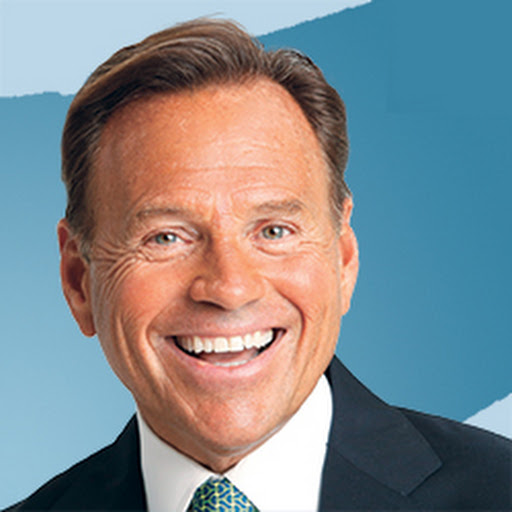
Wednesday, April 9, 2014

Innovate or Capitulate: In The Struggle For Survival, The Fittest Win

"Change is Good. You Go First, Because somebody's gotta win. It might as well be you."


Good Morning Folks,

"Innovation" is one of those buzzwords you hear all the time. People are always talking about being a "leader in innovation" or "taking innovation into the twenty-first century". It can look like some kind of innovation nation out there it's hard to tell who is devoted to innovation and who is simply paying lip service to It. We at FSO are serious about innovation. So serious that we use the word (re) IMAGINE to define who we are: a partner dedicated to always finding new and better ways to improve service, lower costs and take better care of people.

I believe complacency is when innovation ends. The advantage every business has, but few in our industry leverage to the advantage that we do, is the ability to innovate and reinvent. So many great companies lose their edge and end up playing catch-up until they're obsolete. That’s not going to happen here.

Dramatic paradigm sights are occurring in every industry, YOUR industry because traditional barriers to entry don't exist anymore. If you don't think a new era of change and creative destruction isn't headed to your door step, you are sadly mistaken. If you want to be on top, you have to look at innovation in a new, interactive way. You have to believe it is worth coin, its worth doing wrong. You have to be willing to try your model, test it, innovate around it, get out, screw up, and then do it right. You have to understand that speed is everything in an electronic realm because you can fix mistakes before anyone realizes that mistakes were made.

We are facing the biggest transformation the way business is conducted since the industrial revolution. If you are willing to innovate, you are taking steps towards crashing your competition.

The problem according to ANTHONY IANNARIN of there sales blog is change, He writes:
==> Change is more difficult than you believe. Having an intellectual understanding the reason something needs to change isn’t enough. An emotional need to change is necessary and more powerful. 
 ==> Change is psychological. You first have to have a shift in your mindset, your personal philosophy, your personal psychology. Without that shift, there will be no change.
Why something is being changed is more important than how that change is accomplished.
==> Change takes longer than you believe.  It takes longer to sell, longer to build consensus, and longer to execute before results are seen. It is mistake to believe the results of change will be realized quickly, even though change happens in a second 
==> Change comes with built-in enemies. The very fact that you are trying to make change will cause some to oppose you. Resistance is your enemy when you try to change yourself. 
Most change initiatives die not because the idea isn’t good or necessary but because it was poorly executed. The change is usually poorly executed because it lacks executive engagement. People are exceptionally gifted at waiting out change initiatives. 
We overestimate what we can accomplish in a short period of time and underestimate what we accomplish over a longer period. When results don’t come fast, change initiatives are often abandoned. The better results were only a little bit further.
==> Sometimes change initiatives fail because too many variables are changed at once. One major change might have been enough to produce a result, but because so much was attempted, nothing really changed. When too much is changed, you can’t easily figure out what is working and what isn’t.
Radical change very quickly becomes the new status quo. It soon develops its own defenders who protect it from future change.
As an owner and CEO, I am keenly aware that rapid change in business and technology is the “new normal.”  The only way for our company to survive, let alone thrive, is to continuously reinvent and redefine— everything.

This means we can’t go backward, and we can’t stand still. We can’t rest on our laurels and we can’t keep doing what we’ve always done — even if we are doing our best, we need to keep doing it better.

Because at FSO, we never stop rethinking, refreshing and (re)IMAGINING a better future for our clients. 

We strive to give our customers the ability to do what they can’t currently do but would want to if they only knew it was possible.

The love running throughout this company is infectious and it’s impossible to not share it with everyone I come in contact with.

To our team: You have been given the opportunity to show what you’re made of, to be so much stronger and better than you were just the day before and to show the world of business a better way.  

So as you get ready to start your day take a second to think; how am I contributing to the FSO competitive difference? How can I be better?

How can I get to infinity and beyond? 

How can I be that star, that hero that brings to our clients all the positive change, wealth and success they deserve?

IT IS YOU that makes FSO who we are. Love Life!


Mitchell D. Weiner
Chief Happiness Officer  

...................................................................................................................
"In the struggle for survival, the fittest win out at the expense of their rivals because they succeed in adapting themselves best to their environment." ~~ Charles Darwin
......................................................................................................................


S. ANTHONY IANNARIN is the President and Chief Sales officer for SOLUTIONS Staffing, a best-in-class regional staffing service based in Columbus, OhioHe is also the Managing Director of B2B Sales Coach & Consultancy, a boutique sales coaching and consulting company where he works to help salespeople and sales organizations improve and reach their full potential. And he works ass an adjunct faculty member at Capital University’s School of Management and Leadership. Anthony teaches Personal Selling in the undergraduate program, and I teach Persuasive Marketing and Social Media Marketing in the MBA program.


Tuesday, April 8, 2014

Ted Tuesday: Dr. Michael Norton: What To Do With Your Money?

Dr. Michael Norton shares his research from behavioral economics about ways to spend money to increase happiness. Hint: it is not about buying more for ourselves..


Good Morning Folks,

I'm on the road so I have to be brief but I've found a special treat to inspire you on Ted Tuesday.

Harvard Business School professor Michael Norton's counter intuitive talk challenges the way we think about money. If you think money can't buy happiness, maybe you're not spending it right.

Indeed money can buy happiness — when you don't spend it on yourself. Listen for surprising data on the many ways pro-social spending can benefit you, your work, and (of course) other people. (Filmed at TEDxCambridge.)

OK folks. I have to run or I will be late. Promise me to not let anything get in the way of your passion to succeed. Reach. And to be the best you can be. So go out of your way to smile to everyone. Or to nod. Or to introduce yourself. You are the right people at the right time to make something great.


Have a GREAT day and…. Love Life,


Mitchell D. Weiner
Chief Happiness Officer  

Ideas are not set in stone. When exposed to thoughtful people, they morph and adapt into their most potent form. TED Tuesdays on MitchWeiner.com highlights some of today's most intriguing ideas. Look for more talks on Technology, Entertainment and Design -- plus science, business, global issues, the arts and much more— HERE

Monday, April 7, 2014

Encourage, Recognize & Empower: Together We CAN Do It!


"I lift thee and thee lift me and we ascend together."


Good Morning Folks,

WOW!!!! 2014 let it Shine, let it Shine.

FSO has taken the industry by storm! With operations in 57 major US cities and a clear focus on concierge service, our goal remains the same - to help firms improve operations & SAVE MONEY.

Specializing in transforming front of house and back office operations, we are excited to share with you how our clients are leading changes in their firms that are driving cost savings, increasing profitability, creating operational synergies and efficiencies, attracting top talent and taking better care of people - all with FSO!

We're well practiced in the art of hospitality, and there's this sense that we've all been friends for a very long time.

To help our people help you make this happen, FSO is bringing to life amazing and exciting new awards & recognitions. I think every day, regardless of your job title or gravitas, you need only to ask yourself and those around you - how can I help YOU do better things, in better ways?

How do we overachieve our competitors? It's always been a simple formula for me: "Love your people and let them know it" -- the simple recognition that what they do matters.

It all about "putting yourself in others shoes"; empathy is one of the key qualities to flourish and blossom the talent. Showing and truly believing in what someone can achieve always helps them get there.

Everyone is talented at something. We help them discover their talents. Talent will come out if there are opportunity, reasons, and incentives to do so. I find this enables and encourages talented people to do what they really want to be doing - more.


We create an environment that focuses on developing the strengths and unique talents of the individual. We open their eyes to the endless possibilities of believing in themselves. 

Passion is the energy that keeps us going, that keeps us filled with meaning, and happiness, and excitement, and anticipation. Passion is a powerful force in accomplishing anything you set your mind to, and in experiencing work and life the fullest extent possible.

Talent often resounds with passion. Whether as a co-worker, manager or non business relationship, if you can help people identify their passions and identify what it takes incorporate their passions into daily life and short and long term goals, then you will have a chance to see people thrive and be producers and leaders not just cheerleaders and followers.

Ultimately, passion is the driving force behind success and happiness that allows us all to live better lives.

Our people are endlessly unique in our abilities, needs, attitudes and beliefs. We are a blessed team and we have been lighting up the nation.

To our team I ask: "Rock it and make a difference everywhere today. Front of house sites. Put on that extra smile and share a positive FSO smile and attitude to everyone that comes to our front desks. Security. Meet and greet and more. Make today, FREE smiles day." They will smile bigger.

So go out of your way to smile to everyone. Or to nod. Or to introduce yourself.

And when someone does something that helps you, even in the smallest way and even if it's their job, go out of your way to say thanks. Make it your mission to recognize the people behind the tasks: the people that support, that assist, that make everything possible.

To our leaders I ask you to: "Encourage. Compliment on things that your team does well-- Be authentic and a role model and not a judge; be enthusiastic as a model." Show people they matter--especially to you. By recognizing people--especially those who have been conditioned to not expect to be recognized--we add a little extra meaning and dignity to their lives.

At every level at FSO, I encourage you to teach... to share with others. I’ve seen this reignite passion and provide a sense of purpose beyond their daily work load.

Acknowledgement and enthusiasm of another’s talents breeds confidence. Celebrate one another regardless of age or circumstance. Offer genuine praise, support and encouragement. Believe in others even when they can’t believe in themselves. Create a safe and fertile environment for the birth of new ideas.

Most importantly we have to understand that as an individual you can only go thus far, but as a team you can achieve greater success....  When you have your teams fullest dedication and passion and that's when they are connected to a common goal..... Nothing can stop them from achieving it.


As I moved forward and up in my own career, I realized that it's important to pay it forward and give it back. Always. I want to be known as someone that shares knowledge, not hoards it. If I can inspire a person, their talents will blossom.

Because at the end of the day, the most important resource in the entire universe is YOU. Products, services, innovation, ideas, breakthroughs – they all exist in your head, your heart and your hands. The output of your thinking, the engaging of your heart and the enlistment of your hands create profound results.

For me, it is a dynamic life and I never miss an opportunity to put 'smiles on the heart' of colleagues. The heart is the most important measure of the employee; if he/she is truly involved in the moment and working from the heart then good fortune happens. 


Yes we want to be the happiest place to work but we also want to build a nation of better business professionals and leaders.

Together, "yes we can" do it. We are pumped super excited and ready to rock.

Have a GREAT day and a BETTER week!


Mitchell D. Weiner
Chief Happiness Officer  


Thursday, April 3, 2014

==> InspireME Friday: 8 Ways To Keep The Boss Happy


"The secret fear of every boss is that employees are screwing up but are not saying anything about it. So even if you're afraid some bad news might upset your boss, make sure he's informed."


Good Morning Everyone and Welcome to Your Weekend!

Thanks God it’s Friday and THANK GOD IT’S FSO!

Thank you for another great week. 

Lots of amazing stuff happening. From the Eexecutive Leadership Team to each and every employee, THANKS for the effort, passion and hard work. 

Well done! That's why...

Hope springs eternal on this delicious Friday morning.

To set your head in high spirits before sending you off to all this glorious planet offers on a Spring weekend, I share a piece by Geoffrey James— author the world's most visited sales-oriented blog 

Geoff's recent column, "8 Core Beliefs of Extraordinary Bosses," drew a flood of responses.

But there's one thing he didn't mention: An extraordinary boss communicates his expectations clearly to his team. That way, everyone understands what it will take to make your company succeed.

With that in mind: If you are the boss, you'll want to share this column with your team, because it will make your job a heck of a lot easier. And if by chance you're not the boss, memorize this column-because it contains the key to long-term success.

==> 8 Ways To Keep Your Boss (or investor) Happy By Geoffrey James

Here are the rules for keeping your boss happy:

1. Be true to your word.
Your boss wants to trust you. Really.  Therefore, whenever you accept an assignment, follow through religiously, even fanatically. Do what you say you're going to do. Never over commit, and avoid hedging your bets with vague statements like "I'll try" and "maybe." Instead, make your word carry real weight.

2. No surprises, ever.
The secret fear of every boss is that employees are screwing up but are not saying anything about it.  So even if you're afraid some bad news might upset your boss, make sure he's informed. Note: If your boss consistently "shoots the messenger," you can ignore this rule-because his behavior shows he doesn't really want to be in the know.

3. Be prepared on the details.
Your boss wants to believe you're competent and on top of things.  That's why she sometimes picks an aspect of your job and begins randomly asking penetrating questions. Therefore, whenever you're meeting with the boss, have the details ready so you can answer these queries with grace and aplomb.

4. Take your job seriously.
Bosses appreciate individuals who truly care about what they do and willing to take the time to achieve a deep understanding of their craft. Bosses need people who have unique expertise. You don't have to be a pro at everything, but you should definitely have a specific area of knowledge that your boss values.

5. Have your boss's back.
When you see your boss about to make a foolish decision, it's your responsibility to attempt to convince him to make a different one. Make your best case, and express yourself clearly. However, once the decision is actually made, do your best to make it work-regardless of whether you think it was the right one.

6. Provide solutions, not complaints.
Complainers are the bane of your boss's existence. Nothing is more irritating or more boring than listening to somebody kvetch about things that they're not willing to change.  So never bring up a problem unless you've got a solution to propose-or are willing to take the advice the boss gives you.

7. Communicate in plain language.
Bosses are busy people and have neither the time nor the inclination to wade through piles of biz-blab, jargon and weasel words. When dealing with your boss, speak and write in short sentences, use the fewest words possible to make a point, and make that point clear and easily understandable.

8. Know your real job.
Regardless of what it says on your job description, your real job is to make your boss successful. There are no exceptions to this rule. None.

And, by the way: Your boss's real job is to make you more successful. The reversal of these priorities is the source of almost all organizational problems.


When it comes to making the boss happy, all of us at FSO are fortunate to work for a company with hands-on leaders who work tirelessly to ensure we provide a warm and highly inspirational environment for YOU (our employees) and our clients.

Everyone on the team knows their position and role and they work in harmony to execute greatness. That is what FSO is all about – a perfect harmony of perfection and greatness.

We have a great company! Great focus on the people! Great management! Great rewards and recognition programs! Great references! 

I cannot tell you how much I care about you, our employees. How much our employees care about our customers, and how our teamwork across the great USA is paying off.

Know that you very much inspire me and I rely on you, the FSO team, to make a difference.

With that said, be smart… be clever… be personable …and most of all make the most of this glorious spring weekend.

Have a GREAT day and a BETTER weekend!


Mitchell D. Weiner
Chief Happiness Officer  


Throwback Thursday: The Cell Phone, Once The Butt of Jokes, Turns 40

"It’s important not to overstate the benefits of ideas. Quite frankly, I know it’s kind of a romantic notion that you’re just going to have this one brilliant idea and then everything is going to be great. But the fact is that coming up with an idea is the least important part of creating something great. It has to be the right idea and have good taste, but the execution and delivery are what’s key."
~~ Sergey Brin. Interviewed by Jemima Kiss for The Guardian (UK) newspaper, ‘Secrets of a nimble giant’, Wednesday 17th June 2009


Afternoon Folks,

Ironic: I just landed and my cell batteries had died leaving this post queued but unsent until now.

Did you know you can buy a Juice Pack case for you phone which doubles memory life and also carry these spare batteries that look like memory sticks, except they are battery sticks. (Which I keep forgetting about myself, Lindsay??)

All of which leads me to marvel at how far we've come in the 1980s since the cell phone was introduced, and mocked as most innovations are from people set in their ways, afraid of change, unable to (re) IMAGINE a new and better way of getting business done. As Kevin R. Dusold wrote in comment to one of my LinkedIn postings, "Positive change is not inevitable. The only change that is inevitable if you don't change, is the decline of company growth. Many companies resist change, and it is to there disadvantage."

That in mind... April 3 marks the 40th anniversary of the first cell phone call. It was Marty Cooper (Pictured above), a Motorola engineer who made that call in 1973. According to The Verge, Cooper called up Joel Engel, who was also working on a mobile phone at Bell Labs, and said: "Joel, this is Marty. I'm calling you from a cell phone, a real handheld portable cell phone." Cooper used Motorola's DynaTAC to make that first call, the brick phone that would gain a permanent place in pop culture through characters like Zack Morris from "Saved By The Bell" and Gordon Gekko from "Wall Street."

It really is incredible to think about how far cell phone technology has come in the past 40 years. The first cell phones weighed over 2 pounds, cost thousands of dollars, and had a battery life of around 35 minutes.  At a little under eight inches long, yours for a basic charge of $60 to $100 per month, plus tolls. Carry it to the beach, the supermarket, the yacht, the fox hunt, the golf course, the hideaway where you went to get away from it all. Makes it hard to imagine ever complaining about your smartphone again.

It was an impressive technical feat at a time when people didn't even have cordless landline phones yet. But the press wasn't exactly bowled over. Anyone who thinks 21st-century tech bloggers invented the snarky takedown of a promising new technology should have a look at the Associated Press report that ran in newspapers across the country the next morning:

New York, N.Y.—AP—Dick Tracy may have pushed it. A television set in a wrist watch, for heaven's sake. But that telephone in the secret agent's heel is almost here—if you're the Jolly Green Giant, have a jolly green bank account and can wait until 1976.

That's when Motorola, Inc., hopes to come out with its portable phone,
Zing! In fact, the skepticism was warranted—all the way up until it wasn't. Thanks to technological, regulatory, and infrastructure hurdles, it was another decade before a Motorola executive made the first commercial wireless call on a Motorola DynaTAC phone, in October 1983. And it wasn't until the 1990s that handheld cellphones began to achieve mainstream popularity. 
Most reporters were careful to cast doubt on how many would really be willing to pay for that privilege. The Christian Science Monitor piece was headlined, "Really Portable Telephones: Costly But Coming?" A 1980 Washington Post story cited what seemed like an optimistic AT&T marketing study indicating that "as much as 13 percent of the business community would be interested in purchasing one of these advanced systems." But a few early evangelists—surely mocked by their contemporaries—saw even greater potential. In the Globe and Mail in 1983, Jonathan Chevreau wrote (emphasis mine): 
Because of the current high cost to users, the popular notion is that
 of the high-powered business executive making deals by using a telephone
 in his car during rush hour traffic. But cellular radio is far more than that—the technology ultimately 
could replace the ordinary telephone, providing a means of communication 
that would be as personal as the watch or portable radio. 
Indeed, one of the offshoots may be that eventually each person will
 have a "personal telephone number," which could remain the same for life.
Far out! But even among visionaries, few believed the technology would ever go quite that far. "Cellular phones will absolutely not replace local wire systems," one expert source told the Monitor. "Even if you project it beyond our lifetimes, it won't be cheap enough."

That naysayer? One Marty Cooper.

The DynaTAC was just the start of the cell phone, of course. From brick phone to iPhone, here, Via the Huffington Post, are the most important devices in the cell phone's four-decade history (in our estimation, at least).

Howard H. Aiken, was quoted in Portraits in Silicon (1987) by Robert Slater as saying "don't worry about people stealing your ideas. If your ideas are any good, you'll have to ram them down people's throats."

We understand.

FSO is in the business of ideas. Every day we help our clients increase productivity, decrease costs, take better care of people and get more done with less resources. Whatever will become the best business invention since the cell phone is mostly taking shape in the labs of our (re) Imagine team, and being rolled out to over 300 clients across 57 cities today.

If you want to know what you are missing, contact me personally for a FREE assessment. Like Motorola's phone of the 1980s, FSO has to be seen, felt and experienced to be believed.

As we think about our individual impact and the difference that we can make, we realize that it affects others. Like with Marty Cooper's passion for his invention of the cell phone, let's ensure that we are always working together to strategize ways to make other's lives better through opportunity. This is the Mitch way.  

Let's continue to be an amazing team, working together to find others to come with us on this awesome journey we call life at FSO! 

Thanks to Huffington Post and Slate for their reporting and to you for listening.

I hope everyone has the BEST day! Go FSO USA!!


Mitchell D. Weiner
Chief Happiness Officer  


Wednesday, April 2, 2014

Shout Out Wenesday: Gerard Daniel Lyons— Measurable results. Value add. I love it!

"Just because something worked 5 or 10 years ago doesn’t mean it will work in the future. You have to constantly change as the world changes, and sitting back on your laurels is a sure fire way to lose in the long run."


Good Morning Folks,

For years my brand has represented perfection. It has been synonymous with the best service and best people ever. 

Whether a salesperson, an experience associate, a records manager, an informationalist, or messenger, what makes our folks so special is their ability to think beyond their daily tasks and think like our clients. 

"What would the client want? What do they need? How could I be more proactive in their eyes? How could i really impress them?"

Today I wanted to salute one of our FSO rockstars, Gerard Daniel Lyons, who put this promise to practice. Gerard put together the list cost savings initiatives and ideas that follows. 

They were all truly worth reviewing, reading and most importantly ACTING upon. Not only do they address cost savings, but they are also environmentally sound. I really appreciate that.

We know that productivity is about all about delivering quality and value and working smart. (With a smile!)  Gerard' list exemplifies the value of hiring a true STRATEGIC partner who never stops looking out for you, who always take that extra second to ask and then ACT! 

In his words, here are some things Gerard does day to day with keeping costs in mind:

==> Reuse Boxes for shipping. Boxes from Reprographics Dept or Boxes from Vendors and Staples reuse them for shipping INSTEAD OF ORDERING BOXES WHICH CAN BE COSTLY.

==> Ship via UPS Ground when possible. In most cases it is fast and cheaper!

==> A lot of time I use pens from vendors give us pens. I make good use of those pens and keep them until no longer good to use. Imagine where most employees take their employers pens home without a second thought, if everyone from FSO brought their own pen to work and used that pen. Money would be saved.

==> I try to use my cell phone when making personal calls. I want to be respectful of that.

==> I think when wanting to get something done and it may involve usage of the company the simple thing to do is ask your boss or supervisor instead of just doing it.

==> Using brown packing paper instead of bubble wrap.

==> Also reuse packing from incoming shipments.

==> I feel the less we have  around our desk areas the better I feel. Keep things simple and neat.

==> When setting people up with UPS Campus Ship, I set it up so that the option to ship via UPS can be defaulted to shipping UPS Ground but the other options are still there.

==>  find that since there is less to ship to the Tampa, Fla Office I will just mail it via USPS Mail instead of UPS.

==> We use to ship Tampa Mail via UPS 2nd Day Air. When I ship now I ship UPS Ground.

==> Something I should do is bring my own cup in for Tea instead of using the paper cups all the time. Something I should do!!!!

==> Use less printing and do more online. This is something I need to do. It is helpful to print things out for updating the shipping system but less printing would be helpful by all.

==> Turn lights off!!!!!!!!!!! I cannot tell you how many times I have walked by desks and cubes and work areas where no one is there but desk and cube lights are burning away. Shut lights off when not in use.

==>  Recycle. People should be more aware of what they throw in the trash. Is it trash??? Is it plastic, Metal, Batteries, Bottles, Cans, Paper??? Can these items go to recycling. Think Green!

==> Avoid future Healthcare Concerns. Think Organic!!!


Gerard, you have some excellent ideas, and very valid points. Most employees think of their employer's budget as a bottomless pit and can be very careless spending money that's not theirs. But you manage their budget as if it's your own wallet.

Not only do your ideas address cost savings, but they are environmentally sound. I think your last point about Healthcare always deserves more attention then companies pay to it. As the expression goes, "if you don't have your health"….

Thank you for sharing your ideas and smarts and thanks to your manager, Andrew, for being a business leader and not just a cheerleader and ensuring your team is empowered to make a difference.

Perhaps the real message was this: don’t romanticize the past of your business. Just because something worked 5 or 10 years ago doesn’t mean it will work in the future. You have to constantly change as the world changes, and sitting back on your laurels is a sure fire way to lose in the long run. -

There is great merit in exploring the talents people like Gerard have, developing them, encouraging them, and taking them to the next level. And bringing out the best in this often forgotten hourly demographic is where FSO stands apart.

With good leadership, as we prove every day, regular people can accomplish greatness when they work together as a team doing what they do best. 

Indeed - the mark of a true leader is getting others to perform beyond their own expectations. Parents and sports coaches alike can agree to this. 

Measurable results. Value add. I love it. Gerard Daniel Lyons, we salute you.

Now lets put more ideas into action that I'll look forward to sharing right here.

Inspire a Nation, Fulfill Dreams and Love Life!


Mitchell D. Weiner
Chief Happiness Officer  


Tuesday, April 1, 2014

Ted Tuesday: Advertising Guru Rory Sutherland— "Perspective is Everything"

"In truth, brand value is not determined by the flagship product or main service of an organization, it is determined by all of the factors that affect perception. What affects perception? Everything and anything that a customer perceives and thinks about your business," says Rory Sutherland. At TEDxAthens, he makes a compelling case for how reframing is the key to happiness.


Good Morning Folks,

What a rare treat we have for you this fine Tuesday morning.

Rory Sutherland is Vice chairman of Ogilvy. He stands at the center of an advertising revolution in brand identities, designing cutting-edge, interactive campaigns that blur the line between ad and entertainment.

From unlikely beginnings as a classics teacher to his current job as Vice Chairman of Ogilvy Group, Rory Sutherland has created his own brand of the Cinderella story.

He is creative, funny and compelling in this amazing brilliant talk opining why looking at our lives through a different lens may be the key to greater happiness, no matter what challenges we face.

Motivating people, our own key to success at FSO, is often about perspective. Really small changes can make dramatic impact of whether something is boring or interesting, good or bad, safe or unsafe, ... you get the picture.

Rory also gives really strong arguments that:
- when making decision we should base it on technology, economics and psychology
- selling our product is not solely about the quality of product or price but also about perception of our service
- if we have a great service/product but perception of it's quality is that it's bad, don't spend money making it better, spend money changing perspective

All of this is supported by high amount of examples. Rory touches on an interesting topic which is mechanistic innovation and blooms into perception…

‘The london underground cost several billion dollars to reduce commutes by 40 minutes.’ – alternatives would have been to serve free alcohol on the trains or hire supermodels to patrol the aisles. Both would have been cheaper and would have changed perception on the trains being much faster”

This is an interesting distinction, the truth is irrelevant, and in many cases, the truth is more costly than changing the perspective of the user or customer. Several times, the truth isn’t even relevant. When users of the London underground were polled after the 40 minute reduction in time, many didn’t care.

When a problem is solved or an innovation is being created, the truth should not be the end goal, but whatever perception aligns with the business in changing customer perception cheaper. When a company listens to the customer and directly affects the perception, it is a powerful differentiator.

A second point, is thinking from a logical and somewhat economical perspective isn’t always what’s needed. The most difficult things in business to replicate are experiences. Ask yourself if Star-bucks had the goal of being the fastest coffee barista, how difficult would it have been for others to improve and replicate?

Although a customer’s time is important, if Starbucks focused on being fast at delivering coffee instead of their focus on overall experience, it would have become an entirely different company.

A third and final point is the value of brand equity in influencing perception. Rory describes a 5-star restaurant with world class food, yet sewage runs throughout the restaurant. The restaurant could spend a high amount of money on making the food even better, yet no matter how much money is spent on improvement, the sewage has a greater negative affect on perception.

In truth, brand value is not determined by the flagship product or main service of an organization, it is determined by all of the factors that affect perception. What affects perception? Everything and anything that a customer perceives and thinks about your business –  from a negative yelp review to brand confusion caused by mixed marketing messages, to a change in positioning that has not yet affected perception. All of these misalignments are more powerful then truth, and that folks is the truth. 

What a great speech. ENJOY!


After watching this, how can one not be pumped, super excited and ready to rock.

With hat tip and big shout out to the Cleverly Engaged blog for your input.


Have a GREAT day and…. Love Life,


Mitchell D. Weiner
Chief Happiness Officer  


Ideas are not set in stone. When exposed to thoughtful people, they morph and adapt into their most potent form. TED Tuesdays on MitchWeiner.com highlights some of today's most intriguing ideas. Look for more talks on Technology, Entertainment and Design -- plus science, business, global issues, the arts and much more— HERE
About the Author:
Welcome to the fastest growing onsite outsourcing company in the nation! Led by Mitch Weiner, co-founder and industry pioneer, FSO is "the" award winning enterprise-wide outsourcing and people solutions firm servicing a multitude of clients across North America.

Contact Mitch: Twitter | Facebook | LinkedIn | Email